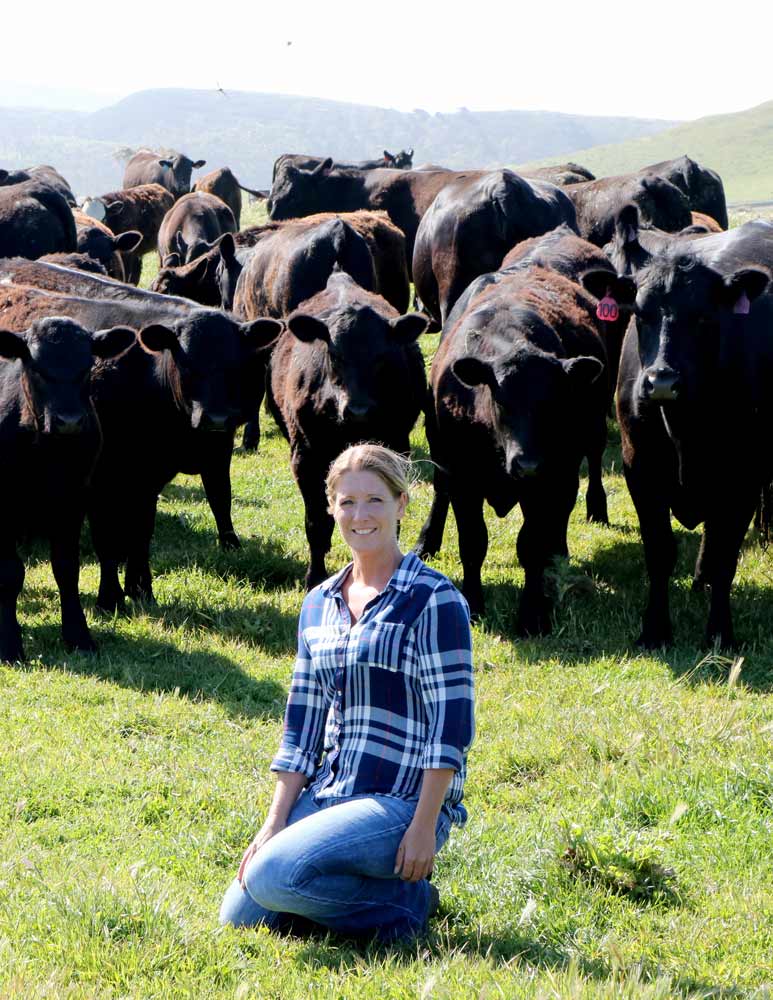
One of my favorite aspects of being a small family rancher is the ability to connect with my customers at places like the Sunday Marin County Farmer’s Market. Over the years, we’ve fielded tons of questions from folks about everything from how to cook goat to what the story is with our veal and how the cows are raised. Let me tell you, there are a lot of misconceptions out there about humane ranching! Here is a selection of some of our most frequently asked questions. Do you have a question, but don’t see it answered here? Just drop me a line!
From my family to yours,

One of the major problems we face today is the overuse of antibiotics. When we routinely give antibiotics to animals, and then eat them, we are contributing to the rise of superbugs who are resistant to these lifesaving drugs. While antibiotics that are responsibly used have a very important part in medicine, they have no place being used as a daily vitamin for livestock. Our animals are never given antibiotics. We find that by treating our animals humanely, and allowing them plenty of clean, open pastures to roam, they simply don’t need antibiotics, as they rarely fall ill.
The conventional veal industry uses crates to contain their calves to inhibit muscle development, making for what they believe is a milder meat. We prefer to let our cows live alongside their own mothers as they roam open coastal pastures, as nature intended. Veal cattle raised this way are happier and healthier, and they are never, ever separated from their mothers, until their day of processing. Veal cattle that have been allowed to live this way produce a delicious, lean, healthy meat that you can feel good about eating.
Did you know that Rossotti Ranch veal cattle are slaughtered at six-eight months of age, which is the same age that pigs and lambs are slaughtered for pork and lamb? Turkeys and chickens are slaughtered at sixteen weeks and seven weeks, respectively. So our beef cattle really aren’t babies by the time they are slaughtered — they are are simply a little younger than beef, which are slaughtered around twelve-fifteen months of age. I love my cows, and you better believe I am incredibly proud to see my cows head off to processing because I know I have given my animals the best possible life by ensuring that they are not separated from their mothers, and that they get to frolic in open pastures under a clear coastal sky. They’ve lived a fairly long and extremely lovely life by the time they become veal.
Like many livestock animals, cows naturally produce methane. When thousands of cattle are clustered together on an industrial farm, the methane produced can indeed be harmful to the environment. At small family operation basted on natural rotational grazing, such as Rossotti Ranch, the cattle play an integral role in protecting and sustaining the environment. Our cattle keep the native grasses in check, preventing them from growing too large or too fast and taking over the land. Our cattle also naturally fertilize the land to sustain all manner of plant life, bugs, birds, and other animals.
Short answer: YES! Longer answer: So, our veal and beef come from the same animal — beef cows. Our Veal simply comes from cattle that are harvested earlier than beef. One of the main differences in flavor comes from the breed of cattle used. The conventional veal industry utilizes cows leftover from the dairy industry, primarily from the Holstein breed. Breeds used for beef, like the Hereford, Gelbvieh, and Black Angus breeds that we use, produce a much more flavorful meat that is a deep rose color, with a rich and supple flavor.
Goat meat is one of the healthiest meats on the planet, consumed on nearly every continent, and it is truly delicious! It’s very easy on the environment, and has lower calories and fat than just about any other meat. Because it is a lean meat, it needs to be cooked properly to unlock the ideal flavor and texture, which is thankfully very easy to do. I’ve never found goat meat to be tough— I actually adore its lean and surprisingly elegant flavor!
Because goat meat isn’t widely produced in the United States, many people have encountered goat meat that isn’t the freshest, or made from animals that haven’t been treated with the same care that we give our animals. While I won’t say that goat meat is a mild as, for instance, chicken, in no way do I find goat meat to be gamey. The flavor is rich and earthy, and is perfect for many recipes where you might otherwise use pork, lamb, or even beef.
Many people don’t have much experience cooking these types of meats, and we are here to help! Check out our cook section, where you will find a wide range of recipes and cooking techniques that can help you have fun in the kitchen. And if you are ever stuck and need some advice, send me an e-mail and I will do my best to help you out with your culinary quandary!